Best OEE Software for Automotive Parts Manufacturers in 2026
Last updated: September 2026
Two automotive stamping plants can both report 82% OEE and mean two different things by it. One counts a changeover under 10 minutes as planned downtime; the other counts anything under 15. One rounds micro-stops under 60 seconds into performance loss; the other logs them as availability loss. Neither plant manager is lying. They’re just running different rulebooks, and that’s the problem an automotive supplier’s OEE software actually has to solve.
That distinction matters more here than in almost any other manufacturing vertical. Automotive parts suppliers don’t just track OEE against their own history. Corporate leadership stacks plants against each other, and OEMs set scorecards that assume the number means the same thing everywhere it’s reported. A tool that gets one plant’s dashboard right but leaves each site to configure its own thresholds hasn’t solved the actual problem. This guide compares the OEE platforms automotive suppliers evaluate in 2026, with the multi-plant reality weighted the way it should be for this industry, not the way it would be for a single standalone factory.
What Should Automotive Parts Manufacturers Look for in OEE Software?
The three factors that matter most for automotive are cross-site standardization, scrap-to-machine traceability, and multi-plant pricing transparency, in that order. A single-plant buyer might prioritize differently, but a multi-site automotive supplier is judged on comparability, not just visibility.
Cross-site standardization means OEE is calculated from one shared logic and one shared set of loss-category definitions across every plant on the platform, not from each site’s local configuration. This is the automotive-specific version of “room to grow.” Growth here doesn’t mean adding modules over time. It means adding plants and still trusting the numbers to line up.
Scrap-to-machine traceability means a quality event is automatically tied to the specific machine, shift, and tooling or process context it happened under. Automotive tolerances are tight enough that a Quality percentage alone doesn’t tell a quality manager anything actionable. They need to know which press, which die, which shift, before they can run a 5 Whys session that goes anywhere.
Multi-plant pricing transparency a VP of Ops can multiply a known per-machine rate across a rollout and get a real budget number, without a new sales call, a bundled quote, or a hardware purchase negotiated separately at each site. Automotive networks scale by plant count, and pricing models that are opaque or front-load cost at every new site get expensive or unpredictable fast when multiplied.
Which OEE Platforms Are Worth Evaluating for Automotive Parts Plants?
Five platforms come up repeatedly in automotive OEE evaluations in 2026: MATICS, Guidewheel, Evocon, Vorne XL, and Redzone. Each takes a structurally different approach to data collection, pricing, and how far the platform reaches beyond the OEE number itself.
| Platform | Deployment model | Deployment time | Pricing structure | Root cause depth | Beyond OEE |
|---|---|---|---|---|---|
| MATICS | Software, connects to existing PLCs/sensors/OPC-UA | Days | Subscription, scoped to the operation | High (machine + shift + tooling context) | Quality, planning, maintenance (MTTR/MTBF) |
| Guidewheel (FactoryOps) | Sensor-based machine + energy monitoring | Days to weeks | ~$15,000/yr for first 10 machines + $5,000-$20,000 onboarding | Medium | Limited |
| Evocon | Cloud OEE tracking | Days | ~$150-270/month per machine license | Medium | Limited |
| Vorne XL | Fixed hardware appliance | Days | ~$4,990 one-time per unit, no recurring fee | High (Six Big Losses) | None |
| Redzone (QAD) | Mobile-first connected worker platform | Days to weeks | Less transparent since QAD acquisition | Medium-high | Partial |
The rest of this guide works through why that table reads differently for an automotive parts network than it would for a single plant in any other industry.
Why Does Cross-Plant OEE Consistency Matter More in Automotive Than in Other Industries?
Because automotive parts suppliers are benchmarked plant-to-plant by their own leadership and against OEM scorecards, not just against their own trend line, so an OEE number that isn’t comparable across sites isn’t useful for the decision it’s meant to support. A plant running 78% under strict definitions and a plant running 85% under loose ones will get read as a performance gap that doesn’t actually exist. That’s a resourcing decision made on bad information.
This is an architecture question, not a data-quality question. A platform where each site independently configures its own OEE thresholds, shift calendars, and loss categories will always produce this problem, no matter how disciplined any individual plant’s operators are. The inconsistency isn’t a training issue. It’s built into the tool.
MATICS applies one configuration model across every site running on the platform: the same calculation logic, the same threshold structure, the same loss-category definitions. That’s not a claim about what any customer has achieved. It’s a description of how the software is built. When Availability, Performance, and Quality are computed from a shared rule set instead of a per-site setup, plant-to-plant comparisons stop requiring a caveat.
Evocon and Guidewheel both calculate OEE per machine reasonably well, but neither is architected around a shared cross-site configuration layer, which means the standardization work still falls on the customer. Vorne XL has the same limitation for a different reason: it’s a per-machine hardware appliance, so a 12-plant rollout is 12 separate appliance deployments with no inherent mechanism forcing shared definitions across them, even though each unit’s own Six Big Losses tracking is genuinely strong.
For automotive procurement teams and quality managers who need one number that means the same thing in Michigan and in Monterrey, this is worth asking directly in a demo: is OEE calculated from one shared logic across sites, or does each site set its own rules that someone then has to reconcile centrally? is a useful primer before that conversation, since the answer changes what a 5-point OEE gap between two plants is actually worth.
How Does Scrap and Defect Tracking Need to Work Differently for Automotive Tolerances?
It needs to connect every defect to the specific machine, shift, and tooling context that produced it, because automotive tolerances are tight enough that a plant-wide Quality percentage doesn’t give a quality manager anywhere to start. Knowing that Quality dropped to 91% this week is not the same as knowing which press and which die caused it.
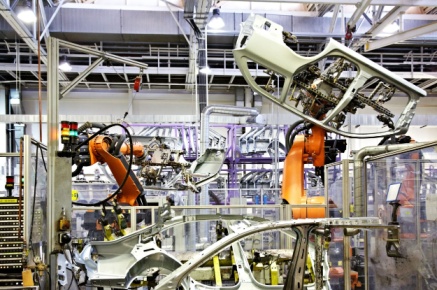
Stamping and machining lines generate scrap in patterns tied to tool wear, die alignment, and process drift, and those patterns are specific to a machine and a shift, not a general trend across the plant. A Quality module that logs defects without that context turns every investigation into a manual pull of production logs before the actual root-cause work can even start.
MATICS’ Quality module does real-time defect tracking that ties each quality event to the machine, shift, and tooling or process context behind it. That’s the architectural piece that supports a 5 Whys session or a structured root-cause conversation, because the team starts with “press 4, second shift, die change at 2:14pm” instead of starting with a percentage and a shrug. It’s worth being precise about what this is and isn’t: it’s a traceability and root-cause tool, not a certification. MATICS doesn’t provide IATF 16949, PPAP, or APQP compliance, and using it doesn’t satisfy those requirements on its own. What it does is make the data underneath those processes easier to trace back to a cause.
Guidewheel and Evocon both track OEE well but are thinner on this kind of quality-event correlation, which matters more in a stamping or machining environment with tight scrap-to-PPM requirements than it would in a process industry where a defect is more likely to show up as a batch-level issue. Redzone’s connected-worker model captures a lot of frontline context through its huddle and check structure, which can get close to this kind of traceability, but it’s built around worker workflows first and machine-event correlation second.
How Should a Multi-Plant Rollout Budget Actually Be Modeled?
It should be modeled on a known, quotable per-machine rate that can be multiplied across every plant in the rollout, without a hardware purchase or a fresh sales negotiation at each new site. That’s the distinction that actually protects a multi-plant budget, not whether the pricing unit is a machine or a site.
This is where the pricing differences between these platforms stop being a line-item comparison and become a planning problem. Vorne XL’s roughly $4,990 one-time hardware cost per unit is attractive for a single line, but a network rollout means budgeting that purchase, plus installation, at every plant, every time. Evocon’s roughly $150-270 per machine per month is straightforward to model for a known machine count, and the same linear logic applies to MATICS: both price per machine rather than bundling cost into an opaque site fee, so scaling the budget is a multiplication once you have a quote, not a fresh negotiation.
Guidewheel’s entry pricing of roughly $15,000 a year for the first 10 machines, plus a $5,000-$20,000 onboarding fee, front-loads cost into each site’s initial deployment, which makes an 8-plant expansion a series of five-figure onboarding projects rather than a predictable multiplication. Redzone’s pricing has become less transparent since its acquisition by QAD, which is a genuine planning problem specifically for a multi-site buyer: budgeting uncertainty once for a single plant is manageable, but budgeting that same uncertainty repeatedly across every additional site in a rollout compounds it.
MATICS is architected as software that connects to machines already on the floor through PLCs, sensors, and OPC-UA/DA, with no hardware purchase required, and it prices per machine rather than bundling cost the way Redzone does or front-loading it per site the way Guidewheel does. That structure is what lets a VP of Ops model the cost of adding plant six, seven, and eight as a known rate times a known machine count, not a new negotiation each time. is relevant here too, since the ROI case for a multi-plant rollout only holds together if the cost side is predictable.
Is Redzone a Good Fit for Automotive Parts Manufacturers?
Redzone is worth serious consideration for automotive plants that run structured lean practices, because its frontline-engagement model, built around huddles, digital check systems, and shift handoffs on the same interface operators already carry, fits naturally with the 5 Whys and kaizen culture already standard in most automotive operations. The cultural fit is architectural, not a marketing angle: the workflow is built into the product, not claimed about it.
The catch for a multi-site automotive buyer specifically is pricing transparency. Since QAD’s acquisition of Redzone, pricing has become harder to get a straight answer on, and that’s a bigger structural problem in a multi-plant context than it would be for a single facility. A single plant negotiates uncertainty once. A multi-plant rollout means negotiating it, or living with it, at every site added to the network. Redzone belongs on the shortlist for automotive teams that value its frontline engagement model, but it should go on the list with a note to budget carefully and get multi-site pricing in writing before committing to a network-wide rollout.
Does Guidewheel’s Energy Monitoring Matter for Automotive Plants?
Not as much as it does in other process industries, because Guidewheel’s combined machine-state and energy-monitoring feed is a stronger differentiator in a thermally cyclic process like injection molding than it is in stamping or assembly. Automotive stamping presses and assembly lines don’t generate the kind of energy-consumption signal that makes that combined feed especially diagnostic.
Guidewheel is a legitimate platform for machine monitoring and is worth a look for automotive plants with significant thermal or continuous-process equipment mixed into their line, such as paint booths or heat-treat operations. For a plant that’s primarily stamping, welding, and mechanical assembly, the energy-monitoring layer adds less than its pricing implies, and it’s not the differentiator that should drive the decision for this vertical.
Frequently Asked Questions
How do you compare OEE consistently across multiple automotive plants? Consistency comes from the software applying one shared calculation logic, threshold structure, and loss-category definition set across every site, rather than each plant configuring its own rules. A platform architected this way, like MATICS, produces OEE numbers that are directly comparable plant-to-plant without a manual reconciliation step. A platform where sites configure independently will always require that reconciliation, regardless of data quality at any single site.
What is a good OEE benchmark for automotive parts manufacturers? Industry-wide, the top-tier OEE benchmark is generally cited at 85%, and typical manufacturing OEE across most plants falls in the 40-60% range, figures that have held roughly steady across manufacturing benchmarking studies through 2026. Automotive parts plants tend to track toward the higher end of that range given OEM scorecard pressure, but the number is only meaningful when it’s calculated the same way across every site being compared.
Does OEE software help with automotive quality certifications like IATF 16949? No. OEE and quality-tracking software can supply real-time defect data, machine-level traceability, and shift-level context that supports the data-discipline underlying certification programs, but no OEE platform, including MATICS, provides IATF 16949, PPAP, or APQP certification, and using one doesn’t satisfy those requirements on its own. Certification is a separate audit and documentation process.
How long does it take to deploy OEE software across an automotive plant network? Software-based platforms that connect to existing PLCs, sensors, and OPC-UA/DA infrastructure, including MATICS, Evocon, and Guidewheel, typically go live within days per site because there’s no hardware installation project. Hardware-appliance approaches like Vorne XL are also fast per unit, but a rollout across many plants means repeating a physical installation at each one, which adds time as the network grows.
Is Vorne XL a good fit for a multi-plant automotive rollout? Vorne XL’s root-cause depth through its Six Big Losses framework is genuinely strong at the single-machine level, and the one-time hardware cost with no recurring fee is appealing for a single line. For a multi-plant rollout it scales as a series of hardware purchases and installations rather than a software license, which makes budgeting and standardizing configuration across a growing plant network structurally harder than with a subscription-based platform.
The Bottom Line for Multi-Site Automotive Buyers
The right OEE platform for an automotive parts network is the one whose architecture matches how the business is actually evaluated: plant against plant, not plant against its own history in isolation. That reframes the usual OEE software checklist. Root-cause depth and deployment speed still matter, but cross-site configuration consistency, scrap-to-machine traceability, and a pricing model that scales predictably across plants matter more here than in a single-site evaluation.
Vorne XL and Evocon are solid at the single-machine level but leave the standardization work to the customer. Guidewheel’s energy-monitoring strength doesn’t line up well with stamping and assembly floors. Redzone’s cultural fit for lean automotive operations is real, but its post-QAD pricing opacity is a genuine risk to budget around in a multi-plant plan. For teams weighing all five against the specific problem of comparable numbers across a growing plant network, the shared-configuration architecture question is the one to lead with in every vendor conversation. For a broader look at how these platforms stack up outside the automotive context, see the , and for the operational side of closing the gap once you’ve picked a platform, walks through the loss categories in more depth.
Running a plastics operation instead? See our companion guide, Best OEE Software for Plastics Manufacturers in 2026.